


Child-Inclusive Mediation | Psychologists & Attorneys SA
Child-inclusive mediation helps families reach peaceful agreements by giving children a safe way to express their thoughts and feelings about parenting plans, custody or divorce. It’s a process where professionals like a child psychologist, attorneys in Durban and psychologists in Johannesburg, together with social workers in Cape Town or social workers in Port Elizabeth, ensure that the child’s voice is heard and respected.
As part of broader family law mediation and co-parenting processes, child-inclusive mediation helps parents create more stable parenting arrangements while keeping the child’s wellbeing at the centre of decision-making.
In South Africa, Section 10 of the Children’s Act 38 of 2005 recognises every capable child’s right to participate in decisions that affect them, an approach supported by both attorneys in Johannesburg and psychologists in Durban who specialise in family law.
This child-centred approach is closely connected to family mediation South Africa, where parenting plans and co-parenting agreements are developed through collaborative and child-focused communication.
Why Should Children’s Voices Be Heard?
When children are involved in mediation, parents often make decisions that are calmer, more realistic, and emotionally supportive.
In many co-parenting disputes, hearing the child’s perspective also helps parents create healthier long-term parenting plans and reduce future conflict after separation or divorce.
Including the child’s perspective helps:
Reduce conflict between parents and improve communication
Protect the child’s emotional health through professional guidance from a psychologist Cape Town or psychologist Port Elizabeth
Create balanced parenting plans that match the child’s daily routine and comfort
Children who are listened to feel valued, leading to smoother transitions and stronger family relationships.
How Do Attorneys, Psychologists and Social Workers Work Together?
In child-inclusive mediation, each professional has a unique and vital role:
Attorneys (such as family attorneys in Durban or attorneys in Johannesburg) guide parents through the legal aspects, helping them understand their rights and obligations while ensuring the child’s best interests are upheld. They may also assist parents in formalising parenting plans developed during mediation.
Psychologists, including specialists like a child psychologist or psychologist Johannesburg, meet with children in a safe environment to help them share their feelings and experiences. They translate the child’s emotions into neutral, helpful feedback for both parents. Through this collaborative process, professionals help parents build healthier co-parenting arrangements that support long-term stability for children after separation or divorce.
Social workers (for instance, social workers in Durban or social workers in Port Elizabeth) look at the family’s overall situation — financial, emotional, and social — ensuring that any agreement supports the child’s real-world needs and daily wellbeing.
Read more about the ethical standards of child participation on the Office of the Family Advocate.
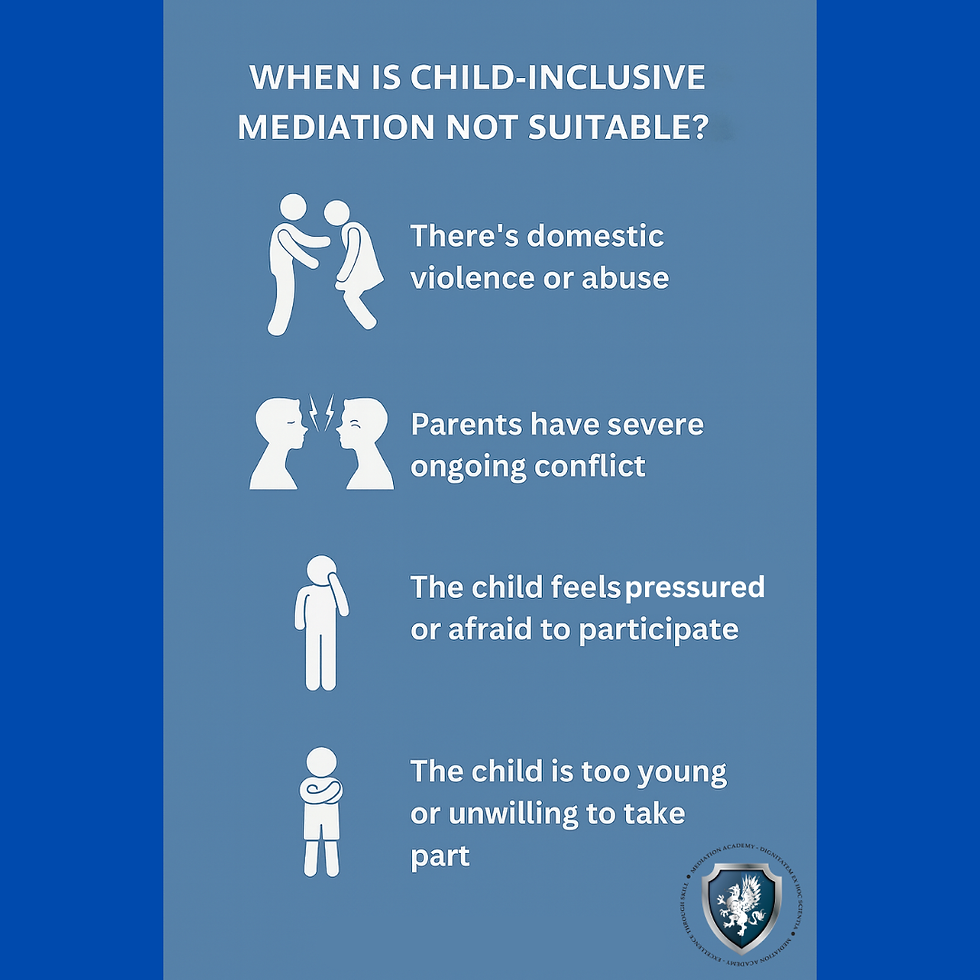
When Is Child-Inclusive Mediation Not Suitable?
This type of mediation should only take place when it’s safe and appropriate. It may not be suitable if:
Parents have severe ongoing conflict
In these cases, a child-focused model is used instead, where professionals (like social workers in Johannesburg or psychologists in Durban) keep the child’s wellbeing central without directly involving them. Even when direct child participation is not appropriate, family mediation may still help parents improve communication and create structured parenting plans that reduce conflict and support the child’s emotional wellbeing.
How Can Professionals Support This Approach?
For attorneys in Johannesburg, psychologists in Cape Town, and social workers in Port Elizabeth, adopting child-inclusive mediation strengthens their professional credibility and enhances family outcomes. By working together, they promote safety, understanding, and long-term peace between parents and children.
These child-focused approaches also support healthier co-parenting structures and more effective parenting plans. Learn more about co-parenting and family mediation in South Africa and how mediation helps families build long-term stability after separation.
Visit Mediation Academy SA to explore accredited mediation training for attorneys, psychologists and social workers who want to specialise in family and child-inclusive practice.
Frequently Asked Questions (FAQ)
1. What age can a child take part in mediation?
Most children can participate from around 8 years old, depending on maturity and comfort level.
2. Who speaks to the child during mediation?
A qualified child psychologist or social worker in Johannesburg trained in child engagement techniques.
3. Is the child asked to choose between parents?
No. The goal is to understand the child’s feelings — not to make them choose.
4. Are conversations confidential?
Yes. Children decide what can be shared with parents, ensuring emotional safety.
5. What if parents disagree about including the child?
Mediators explain the process and may shift to a child-focused approach if one parent objects.
References
Republic of South Africa (2005). Children’s Act 38 of 2005. Pretoria: Government Gazette.
NABFAM (2025). Guidelines for Obtaining the Views and Wishes of the Child in Mediation. National
Accreditation Board for Family Mediators, South Africa.
Boniface, A. (2018). “A humanistic approach to divorce and family mediation in the South African context.” African Journal on Conflict Resolution, 18(2), 112–134.
Published by: Mediation Academy SA
Date Published: 15 October 2025
© 2025 Mediation Academy South Africa. All rights reserved.
Comments